We are pleased to welcome Fares Azzam on Tuesday, April 7, at 1:00 p.m. in the main lecture hall of the Institut Pascal, Building 530, for a seminar titled: “VisionSeg AI: Artificial Intelligence in the Service of Geosciences”.
Abstract:
Contemporary developments in the geosciences are marked by massive production of imagery data, the manual processing of which has become a major bottleneck for research and exploration. VisionSeg AI addresses this challenge by offering an integrated analysis platform based on cutting-edge computer vision and deep learning architectures. This system enables a seamless transition from raw data acquisition to the extraction of quantitative parameters, ensuring the statistical accuracy and reproducibility essential to rigorous scientific protocols. By unifying semantic segmentation and object detection algorithms, the platform addresses geological challenges across multiple scales, ranging from crystalline microstructure to planetary mapping.
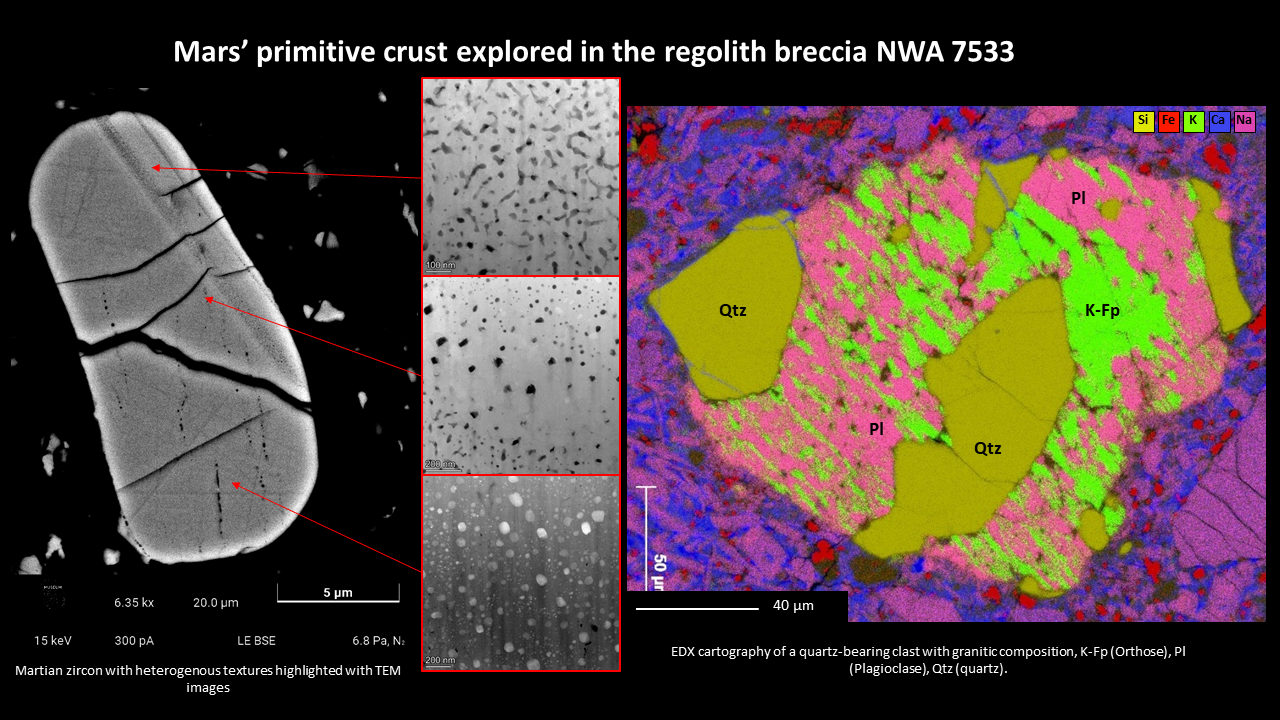
At the microscopic scale, VisionSeg AI redefines the standards of quantitative petrography and mineralogy. By automating thin-section segmentation, the system enables comprehensive identification of mineral phases, surpassing the methodological limitations of traditional point counting. This analytical capability extends to automated grain size analysis, where artificial intelligence processes complex grain assemblages to generate size distributions, cumulative frequency curves, and sorting indices with micrometer-level precision. This data is crucial for characterizing the porosity, permeability, and sedimentological history of samples, while also enabling specialized tasks such as the automated identification of microfossils within dense sedimentary matrices.
The analysis of macroscopic structures also benefits from this technological optimization, particularly through the interpretation of drill cores and three-dimensional modeling. VisionSeg AI facilitates the digitization and analysis of drilling logs, identifying lithofacies, fractures, and mineralization zones with great agility. One of the major advances lies in the reconstruction of 3D volumes from sequential 2D sections, a fundamental technique for visualizing pore networks and understanding structural connectivity in hydrocarbon reservoirs or aquifers. This approach enables the transformation of fragmented two-dimensional observations into coherent and physically representative spatial geological models.
Finally, the platform’s versatility extends to remote sensing data and planetary science applications. By processing satellite and multispectral images, VisionSeg AI automates the segmentation of geomorphological units and the detection of surface anomalies, thereby optimizing large-scale geological mapping. This technology is also deployed in space exploration for the systematic counting of craters or the textural analysis of extraterrestrial soils. By centralizing these capabilities within a single, agile interface, VisionSeg AI democratizes access to artificial intelligence for the geoscientific community. For more details on protocols and performance benchmarks, comprehensive technical resources are available on the visionsegai.com portal.