As part of Théo Rubio’s PhD research, rock samples and samples of various mineralisations were collected from the Carboniferous–Permian Lodève Basin (Hérault – southern France). These specific mineralisations contain several strategic metals (copper, lead, zinc, antimony, arsenic, iron, silver, etc.). The aim is to map these mineralisations using infrared sensors. This is because sunlight shining on the Lodève Basin is reflected off these polymetallic mineralisations as well as off all surfaces (vegetation, house roofs, roads, lakes, rivers, etc.). This light is partly absorbed by the surface it encounters before being reflected. Each type of surface absorbs light at specific wavelengths, which allows the surface type to be identified by analysing its reflected spectrum. This is known as ‘reflectance spectroscopy’.
Hyperspectral cameras are reflectance spectrum sensors that capture wavelengths between 350 and 2500 nm. The data obtained from these sensors are images in which each pixel contains a reflectance spectrum between 350 and 2500 nm.
To be able to identify a type of surface based on its ‘spectral response’ (i.e. its reflectance spectrum), reference ‘spectral responses’ for that surface are required.
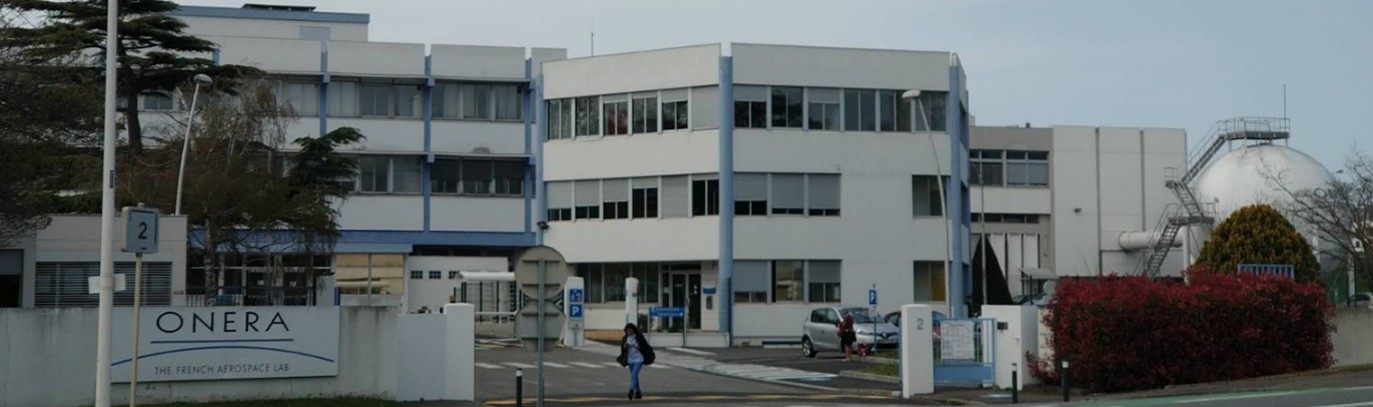
Théo therefore spent three weeks at the National Office for Aerospace Studies and Research (ONERA) in Toulouse, in the Department of Optics and Associated Techniques (DOTA), to measure the spectral responses of each of his samples in the laboratory. These measurements will serve as a reference for identifying the spectral responses of ‘hyperspectral images’ that will subsequently be acquired in the field.
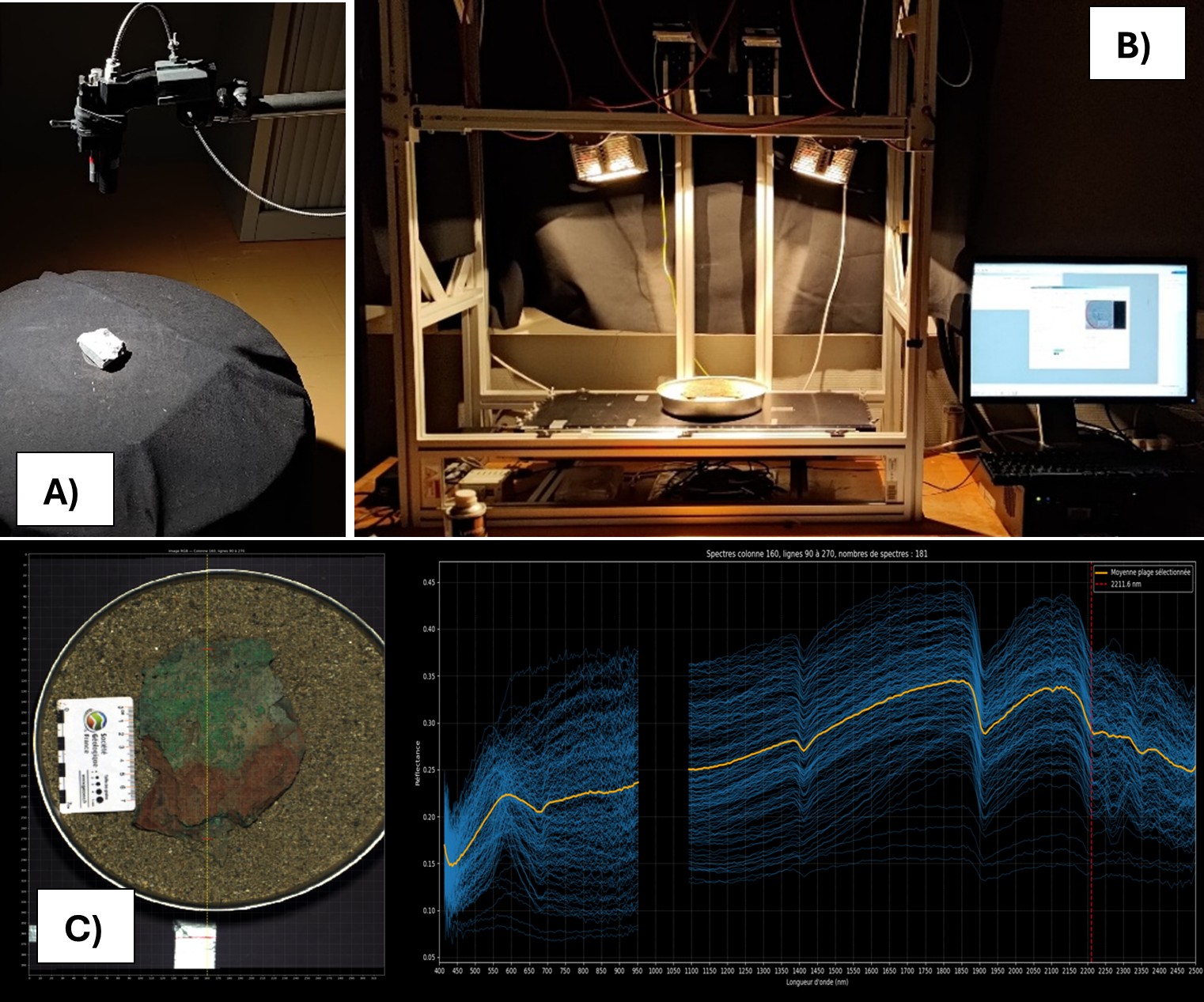
Figure 1:
A) Single-spectrum measurement using the ASD FieldSpec 4.
B) Acquisition of hyperspectral images using the Hyspex imaging bench.
C) Left: Hyperspectral image of a sample in a sand dish; right: spectra of the pixels in the vertical line on the sample image.