

The Lodève Basin uranium system revisited: origin, conditions of mobilisation, transport, trapping and re-mobilisation (URALOD)
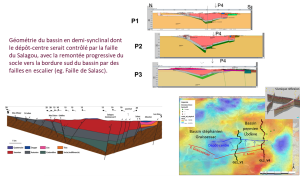
Through the synergy of three strong teams (Geosciences Paris-Saclay, Geosciences Montpellier and Geosciences Rennes), UraLod aims to revisit the uranium-bearing system of the Permian Lodève basin by combining concepts and modern methods to produce an integrated metallogenic model. The project will also benefit from the methodological developments of the UraMod (CNRS programme NEEDS https://needs.in2p3.fr/) structuring project.
The most recent work on Ba/sulphide mineralisation in the basin shows that the main mobilisation of fluids and metals is associated with the Permian rifting phase and is concealed by the Middle Triassic. The Jurassic or Cretaceous ages obtained by U-Pb in the 1990s do not therefore appear to correspond to the main periods of emplacement of uranium mineralisation.
This project aims to define the origin, conditions of mobilisation, transport, trapping and re-mobilisation of uranium in the Lodève Basin: in other words, to establish a coherent metallogenic model, which does not exist to date.
Key words: Uranium, Lodève, resources, metallogeny, dating, fluid circulation, numerical modelling, NEEDS.
Project leader : Antonio Benedicto
Funding : CNRS programme NEEDS https://needs.in2p3.fr/
Staff involved at GEOPS : Antonio Benedicto, Paul Coutable (PhD student)
Collaboration with
Géosciences Rennes : Philippe Boulvais, Frédérique Moureau, Yanick Branquet et Christian Le Carlier De Veslud
Géosciences Montpellier : Gregory Ballas, Michel Lopez